
Hello and welcome to exampundit. Here are the solutions of WBSEDCL 2017 Office Executive Practice Set.
Solutions
6-10:
Solutions:
6. Let the population of state ‘F’ in 2013 = 100
Then population of state ‘F’ in 2014 = 150 (Since growth is 50%)
So, Required % = 100/150 × 100 » 67%
7. Population of state ‘B’ in the year 2014 =
5 × 155/100 135/100
» 10.50 lakh
8. C12/D12 = 2/3 and C12 = 2.50 Lakhs
So, C12 = 2.5 x 140/100 = 3.5 Lakhs
So we get, the population of D in 2013 = 3 x 3.50/2 = 5.25 Lakhs
9. Population of state ‘B’ in 2012
= 4 × 100 × 100/155 × 135= Population of D in 2012
Population of state ‘D’ in 2014 = 1×100×100×160×170/100×100×155×135
= 5 lakhs
10. Suppose population of state E in 2012 = 100
Then population of state E in 2013 = 125
*since 25% growth
And population of state E in 2014 = 125 (120/100) = 150
*since 20% growth
So, required ratio = 100/150 = 2/3
11-15:
Solutions :
Area of 4 walls of a room = 2 (l + b) × h
Area of floor = l × b
Floor Area of bedroom = 15 × 12 × 2 = 360 m2
Floor Area of drawing room = 20 × 18 = 360 m2
Floor Area of Dining room = 64 m2
Floor Area of Kitchen room = 120 m2
Floor Area of Bathroom = 48 m2
So, Total = 952 m2
Remaining area = 1000 – 952 = 48 m2
Cost of carpeting = 48 × 16 = Rs. 768
Room
|
Area
|
Cost
|
2 Bedrooms
|
2x(2(15+12)×15)=810×2=1620
|
81000
|
Drawing
|
2(20+18)×15=1140
|
57000
|
Dining
|
2(8+8)×15=480
|
24000
|
Kitchen
|
2(10+12)×15=660
|
23100
|
Bathroom
|
2(8+6)×15=420
|
14700
|
Solutions:
16. Reqd Difference,
= (19-11/100) x 120000 = 9600
17. Reqd percentage,
= 10200/120000 x 100 = 8.5%
18. Estimated cost of furniture and miscellaneous expenditures
(13+8/100) x 120000 = 25200
Actual cost of Furniture,
88/100 x 13/100 x 120000 = 13728
Actual cost of furniture and miscellaneous expenditure
= 13728 + 10200 = 23928
Total expenditure of the family
= 120000 – 25200 + 23928 = 118728
Advertisement
(adsbygoogle = window.adsbygoogle || []).push({});
19. Reqd Estimated cost,
(15+14/100) x 120000 = 34800
20. Amount spent on furniture,
88/100 x 13/100 x 120000 = 13728
21-25:
S is the grandmother of T and is a housewife. So X who is a lawyer and grandfather of R must be married to S. Thus R and T must be brother or sister and be the two students. Q who is an engineer and father of T will be father of T and R and must be married to P who shall be the only teacher in the family. Thus the questions can be answered as follows.
31-35:
S is the grandmother of T and is a housewife. So X who is a lawyer and grandfather of R must be married to S. Thus R and T must be brother or sister and be the two students. Q who is an engineer and father of T will be father of T and R and must be married to P who shall be the only teacher in the family. Thus the questions can be answered as follows.
31-35:
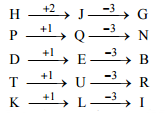
32. Solutions - There is a gap of two letters between the two consecutive letters of each term.
33. Solutions - First, Second, and third each term is one more than the square of prime number. Hence the fourth term = (19)2 + 1
34. Solutions - Second term = First term + 1/8 First term.
Fourth term = Third term + 1/8 Third term
51-55:
51. Solutions - No error
52. Solutions - Replace 'founding' with 'find'.
53. Solutions - Replace 'in' with 'of'.
54. Solutions - Replace 'turn up ' with 'turned up'.
55. Solutions - Replace 'to' with 'on'.
56. 2; + 4 × 2, + 8 × 3, + 12 × 4
57. 1; The series is based on combination of two series. S1 = +13, +26, +39... and S2 = +7, +14, +21...
58. 4; +36, + 72, + 144, + 288...
59. 3; (22)², (27)², (32)², (37)²..
60. 3; The series is + 72 , + 142 , + 212 , + ... 7. 5; The series is 40 × 1.
62:
63:
64
65
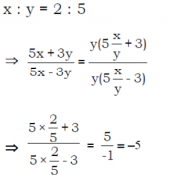
66
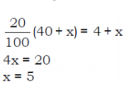
67
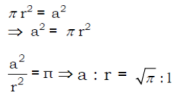
68
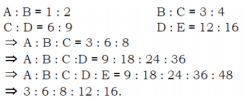
69
70
71
72

73
74
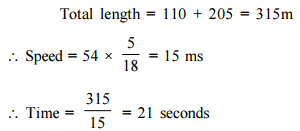
75
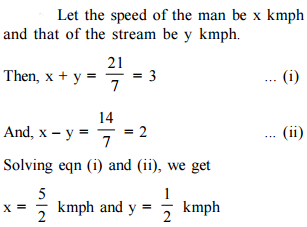
ep Recommended Test Series
Sponsored
(adsbygoogle = window.adsbygoogle || []).push({});
Regards
Team ExamPundit