Finance /
Business / Economy
1. Union Finance Ministry constituted High
Level Committee to hear industry's tax issues
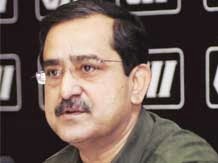
- · The Union Finance Ministry on 3 December 2014 constituted a High Level Committee (HLC) to interact with trade and industry on tax-related issues on a regular basis. The high level committee will be headed by former Chief Economic Advisor (CEA) Ashok Lahiri.
- · Other two members of the committee are Sidhartha Pradhan, retired member of the Settlement Commission (Income Tax and Wealth Tax) and Gautam Ray, retired DG (Audit) of the Customs and Central Excise.
Terms of Reference (ToR) of the High Level
Committee
- · The High Level Committee will interact with trade and industry on regular basis and ascertain areas where clarity in tax laws is required.
- · The HLC will give recommendations to the Central Board of Direct Taxes (CBDT) and the Central Board of Excise and Customs (CBEC) for issuance of appropriate clarifications by way of circulars, instructions on tax issues.
- · The CBDT/CBEC will issue the required clarifications, circulars, instructions within a period of 2 months from the date of receipt of recommendations of the HLC.
- · The HLC will be assisted by two Nodal Officers not below the rank of Joint Secretary/Commissioner, one each from Income Tax and Customs & Central Excise. The choice of Nodal Officers will be recommended by CBDT and CBEC. The appointment of the Nodal Officers will be made with the approval of Revenue Secretary.
- · The HLC shall set its own procedures for regulating its work.
- · The HLC may consult experts and tax professionals from outside as it may consider appropriate. The HLC may also invite officers from Department of Revenue, including CBEC and CBDT and other Government Departments for interaction.
- · The Chairman and two members of the Committee will function on part time basis.
- · The term of the Committee shall be for one year from the date of its constitution, subject to further extensions as may be considered appropriate by the Department of Revenue, Union Ministry of Finance.
- · The HLC will submit half-yearly reports to the Union Finance Minister Arun Jaitley.
2. New India Assurance launched cheapest
top-up health insurance plan
- · Largest health insurance provider New India Assurance (NIA) on 1 December 2014 launched the cheapest top-up health insurance plan in the country.
- · It will be sold as an individual policy and also as a family floater plan where the sum insured is shared among all members of a family.
As per the plan,
- · Hospitalization expenses ranging from 15 lakh rupees to 20 lakh rupees can be availed for 3500 rupees a year for someone up to 44 years.
- · It covers person with a basic mediclaim policy and uninsured people who are in a position to bear expenses up to the threshold limit of 5 lakh rupees on their own.
- · It provides for a sub-limit in respect of room charges. The room rental limit is 5000 rupees per day for someone with a 5 lakh rupees threshold and 8000 rupees if the person goes for an 8 lakh rupees threshold.
- · It covers critical illness and small critical illness to take care of the non-hospitalisation expenses also.
- · A unique aspect of NIA's cover is that for the threshold limit to be reached, all hospitalization expenses are taken into account irrespective of whether the expenses would qualify as an insurance claim.
- This new top-up health plan of NIA has the potential to be disruptive given its pricing and the distribution reach of the country's largest non-life insurer.
India
3. Indian Navy Celebrates 43rd Navy Day on 4
December
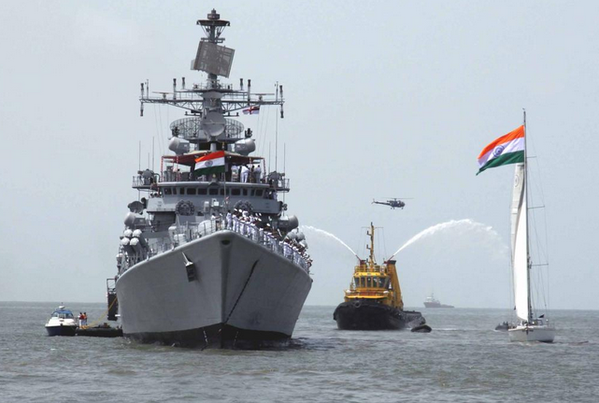
- · India on Thursday celebrated 43rd Navy Day, with Chief of Naval staff Admiral Robin K Dhowan saying the Navy personnel would rededicate themselves to the service of the nation.
- · "On the occasion of Navy Day 2014, the personnel of the Navy rededicate themselves to the service of the nation. Indian Navy is a multi-dimensional combat force, we shoulder the responsibility to safeguard maritime interests of nation," said Admiral Dhowan.
- · The Navy chief, along with Air Chief Marshal Arup Raha and Army Chief Lt General Dalbir Singh Suhag also paid tributes to martyrs of INS Sindhurakshak at the Amar Jawan Jyoti in New Delhi.
- · He also assured that all aspects were being analysed as to why the accident took place.
- · Earlier in the day, Prime Minister Narendra Modi saluted "Navy personnel and the impregnable spirit and utmost devotion with which they protect our Motherland".
4. Justice Krishna Iyer passes away
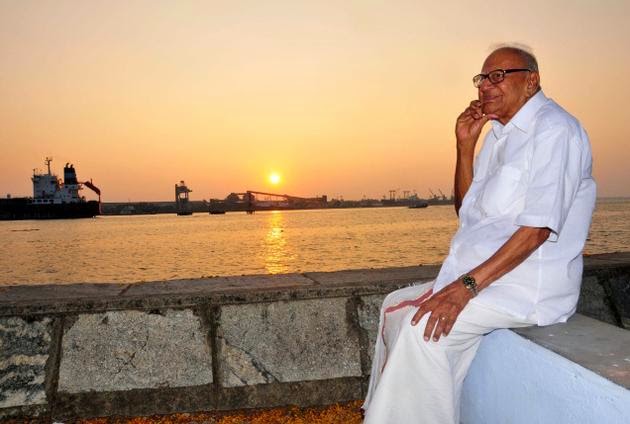
- · Eminent jurist and former Supreme Court judge, Justice V. R. Krishna Iyer, passed away at a private hospital in Kochi around 3.30 p.m. on Thursday. He died due to renal and cardiac failure, hospital sources said. He was hospitalised for a fortnight.
- · Justice Iyer, known for his forthright views, turned 100 recently. He was sworn in as the judge of the Supreme Court on July 17, 1973 and retired at the age of 65 on November14, 1980.
- · Born to a leading criminal lawyer V.V. Rama Ayyar in 1915 in Thalassery, Justice Iyer had his education at the Basel Mission School, Thalassery, Victoria College, Palakkad, Annamalai University and Madras Law College. After starting legal practice in 1937 under his father in the Thalassery courts, he used to appear for workers and peasants in several agrarian struggle-related cases in his early years of practice.
- · He became a member of the Madras Legislative Assembly in 1952. He held portfolios such as law, justice, home, irrigation, power, prisons, social welfare and inland navigation in the first Communist government in Kerala headed by E.M.S. Namboodiripad that came to power in 1957. He was instrumental in passing several pieces of people-oriented legislations during his tenure as minister in the Communist government.
- · He resumed his legal practice in August 1959 and threw himself into the legal profession after he lost the 1965 Assembly election. He was appointed a judge of the Kerala High Court on July 2, 1968. He was elevated as Judge of the Supreme Court on July 17, 1973, and retired on November, 14, 1980. He served as a Member of the Law Commission from 1971 to 1973.
- · His landmark judgments include the Shamser Singh case which interpreted the powers of the Cabinet vis-à-vis the President, Maneka Gandhi case which gave a new dimension to Article 21, Ratlam Municipality case, and Muthamma's case. He had pushed for reformative theory, in contrast to deterrence theory in the criminal justice system. He also received brickbats for granting conditional stay on the Allahabad High Court verdict declaring former Prime Minister Indira Gandhi's election to the Lok Sabha void.
5. SC constituted Social Justice Bench to
deal with social issue
- · Supreme Court on 3 December 2014 set up a Social Justice Bench to exclusively hear cases related to women, children and underprivileged. The apex court set up the special bench in lieu of the specialized approach needed for dealing with such social issues.
- · The newly constituted two-judge SC bench will be headed by Justice Madan B Lokur and comprises of Justice U U Lalit as member. The bench will assemble every Friday at 2 PM from 12 December 2014 onwards.
- · The Social Justice Bench is a brainchild of Chief Justice of India H L Dattu to ensure early disposal of the pending cases related to social justice so that the masses will realize the fruits of the rights provided to them by the Constitution.
- · The new bench will take up not only pending matters but also new ones in order to secure social justice as enshrined in the Preamble of Constitution of India.
Type of issues that will be heard by the
Social Justice Bench include
- · Issues related to the release of food grains lying in stock for use in drought-affected areas, framing of a fresh scheme for their public distribution
- · Taking of steps to prevent the untimely death of women and children for want of nutritious food, hygienic mid-day meals in schools, clean drinking water, provision of safety and secured living conditions for women forced into prostitution
- · Issues related to children to provide night shelter to destitute and homeless
- · To provide medical facilities to all the citizens irrespective of their economic condition
6. Prince of Gujarat: The Extraordinary Story
of Prince Gopaldas Desai released
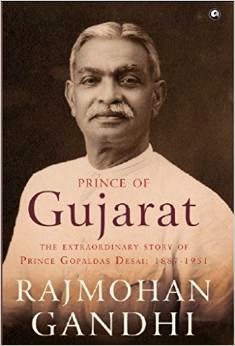
- · Book titled Prince of Gujarat: The Extraordinary Story of Prince Gopaldas Desai (1887-1951) authored by Rajmohan Gandhi was released on 7 November 2014.
- · In this biography, author Rajmohan Gandhi has used letters, rare documents, personal accounts and historical narratives in the book and tried to recreate vivid and moving detail of life and times of a leader of supreme honesty and unalloyed patriotism who also battled against the hierarchies of Indian society.
- · The writer in the book has described the story of Gopaldas born in 1887 into a clan of princely Patels, Darbar (Prince) of the people of his tiny state in Saurashtra and his active and courageous participation in the struggle for India’s freedom and social justice. He also narrates the story of Gopaldas fight for minority Gujarat’s Muslims, dalit rights and women rights.
About Gopaldas Desai
- · Gopaldas Ambaidas Desai also called Darbar Gopaldas Desai was born at Vaso in the present day Kheda district of Gujarat in 1887
- · He was a former prince and later ruler of the State of Dhasa in Saurashtra and a noted Gandhian political and social activist
- · He is remembered as the first prince in India who gave up his principality to become a freedom fighter against the British Raj
- · He along with his wife Bhakti Lakshmidevi Desai better known as Bhaktiba became active freedom fighters from 1922 after which his state was confiscated.
- · He was deposed as ruler by the British after he disobeyed the British Resident General's warnings against his involvement in the national movement and extending financial support to Gandhi
- · The British then rejected the claims of Gopaldas other three sons and instead appointed Gopaldas brother Chaturbhai as the new ruler. He died in 1951
About the Author
- · Rajmohan Gandhi born in 1935 is a biographer and grandson of Mahatma Gandhi. He is a research professor at the Center for South Asian and Middle Eastern Studies, University of Illinois at Urbana-Champaign, USA. He is also a Scholar in residence at Indian Institute of Technology Gandhinagar.
- · His father was Devdas Gandhi, son of Mahatma Gandhi, Father of the Nation.
Some of his books include
- · Rajmohan Gandhi last book was Punjab: A History from Aurangzeb to Mountbatten, published in 2013
- · In 2009 his study, A Tale of Two Revolts: India 1857 and the American Civil War was published in India, the UK and the US
- · Ghaffar Khan: Nonviolent Badshah of the Pakhtuns published in 2004
- · Revenge & Reconciliation: Understanding South Asian History published in 1999
- · Patel: A Life, a biography of Vallabhbhai Patel (1875-1950), Deputy Prime Minister of India, 1947-50
- · Eight Lives: A Study of the Hindu-Muslim Encounter (1987)
- · The Good Boatman: A Portrait of Gandhi was published in 2009 in a Chinese translation in Beijing
Few books those were awarded
- · Mahatma Gandhi, Mohandas: A True Story of a Man, His People and an Empire – it received the prestigious Biennial Award from the Indian History Congress in 2007
- · Rajaji: A Life, a biography of Chakravarti Rajagopalachari (1878-1972) – for the book in 2001 he received the Sahitya Akademi Award.
7. Meghalaya formed panel to expedite
inclusion process of Khasi-language in Constitution
- · State Government of Meghalaya on 3 December 2014 constituted a committee to speed up the process of getting the Khasi-language included in the Eighth Schedule of the Constitution of India.
- · The 15-member committee will be headed by Deputy Chief Minister RC Laloo.
- · The committee was formed after Chief Minister Dr. Mukul Sangma in last week of November 2014 assured the assembly that the government will constitute a committee for the purpose.
About Khasi-language
- · Khasi also known as as Khasia, Khassee, Cossyah or Kyin is a language of the Mon-Khmer linguistic branch
- · Khasi language is recognized as the Associate Official Language of the state after the Meghalaya State Language Act, 2005 received the governor's assent on 1 May 2005
- · The language is spoken by at least 1.5 million people in the Meghalaya, mainly by people of Khasi and Jaintia tribes
- · The Khasi language has obtained credible status at the academic level and is included in the syllabus of graduate and post graduate studies of North Eastern Hill University (NEHU) enabling students to do research work in Khasi leading to the MPhil and PhD degrees
- · The Khasi authors have been awarded with Bhasha Samman by the Sahitya Akademi in 1996 and 2012.
- · Since 1971, Khasi community has been struggling to accord constitutional recognition of Khasi-language
- · UNESCO on 6 April 2012 said that Khasi-language is no longer in danger and withdrew Khasi from its Atlas of the World’s Languages in Danger
8. Oldest litigant of Babri Masjid case
Hashim Ansari decided to withdraw his plea
- · The main and oldest litigant in the Ram Janmbhoomi-Babri Masjid dispute, Mohammad Hashim Ansari (94) was in news recently as he decided to withdraw his plea on the case on 3 December 2014. He has been fighting the case since 1959.
- · His decision came three days before the 6 December, the anniversary of Babri Masjid demolition.
- · Exasperated over the politicization of the issue, Ansari said that he was ready for talks with the Prime Minister for peaceful negotiations in the matter if he promises to ensure punishment to the demolition accused.
- · Meanwhile, the legal experts say that Hashim Ansari’s withdrawal will not make any difference as several others still remain as the party in the matter.
9. DIPP issued Press Note 10 to relax FDI
norms for the construction development sector
- · Department of Industrial Policy and Promotion (DIPP) on 3 December 2014 issued Press Note 10 of 2014 series to relax the Foreign Direct Investment (FDI) norms for the construction development sector. DIPP is under the Union Ministry of Commerce and Industry.
- · The eased norms include easy exit norms and reduced built-up area and capital needs.
Revised norms under Press Note 10
- · 100 percent of FDI is allowed in construction development sector through the automatic route. However, 100 percent FDI is permitted only in completed projects for operation and management of townships, malls/ shopping complexes and business centres.
- · FDI is not permitted in an entity which is engaged or proposes to engage in real estate business, construction of farm houses and trading in transferable development rights (TDRs).
- · Foreign investor will be permitted to exit on completion of the project or after development of trunk infrastructure, that is, roads, water supply, street lighting, drainage and sewerage
10. Remember Bhopal museum inaugurated
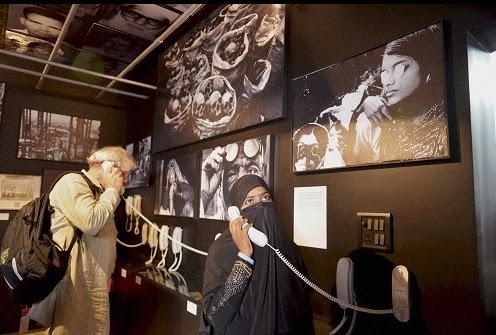
- · Museum named Remember Bhopal was inaugurated on the eve of 30 years of Bhopal gas tragedy on 3 December 2014.
- · The museum portrays the trauma and 30 years of relentless struggle by the victims to get justice. It houses photographs and personal items of the victims, accompanied by audio clips recorded by relatives.
- · The museum has nearly 50 original audio recordings of the survivors cut into three minutes loops that can be heard by picking up phone receivers hung on the walls. Besides, survivors or families of the several victims have recorded their own testimonies for the museum.
- · The museum is split into five sections — Trauma Room, Health Room, Anderson Wall, Toxic Water Wall, Compensation Room and the Movement Room . Every section is a heart-wrenching reminder of the catastrophe and meticulously conserves the last tangible link with the dead and those who survived.
International
11. India, Japan to cooperate on cyber
security and Green ICT
- · India and Japan have decided to cooperate in the fields of cyber security and Green ICT (Information and Communication Technology).
In a
statement after India-Japan Joint Working Group Meeting on ICT, in New Delhi
today, the two countries announced the decision to work on the following five
areas which are to be implemented as India-Japan joint projects:
- 1. Green ICT (Green Mobile Base Station project)
- 2. Cyber Security Cooperation (Japan-India Combat Spam project)
- 3. Cooperative project for detecting symptoms and quick response to cyber-attacks (PRACTICE)
- 4. ICT for Disaster Management (ICT4DM) ICT Use in disaster-affected areas project
- 5. ICT Application for Social and Economic Challenges (National ID Application and Utilization Platform project)
The Ministry
for Communication and Information Technology (MCIT) in India and Ministry of
Internal Affairs and Communication (MIC), Japan will coordinate the activities
for taking these projects forward by involving industrial partners in both the
countries. They will aim towards implementation of these joint projects by
early 2015.
12. DNA test of skeleton of King Richard III
raised questions over succession in British monarchy
- · Scientists at University of Leicester in a DNA test conducted on skeleton of King Richard III found that the male line of descent was broken at one or more points. The lineage was broken between Richard III and Henry Somerset, 5th Duke of Beaufort (1744-1803).
- · The study related to this was published in the latest issue of Nature Communications and the study was led by Turi King of Leicester University.
- · The researchers said that the study has provided scientific evidence for the first time of a possible question mark over medieval lines of succession in the monarchy.
- · In the study, the paternity tests on the DNA of a living male-line descendant of Richard III’s royal lineage have failed to match. Researchers said that this discovery points to some royal person being born on the wrong side.
- · The study found that there were 19 links in that chain, so there is an equal probability of any one of those 19 being broken.
- · However, the DNA test passed on exclusively through the maternal line, and matches precisely with two female-line descendants alive today. These two descendants are 14th cousins twice removed from Richard III.
Sports
13. S Ravi in ICC panel of umpires for World
Cup

- · Indian umpire S Ravi was today named in a 25-member list of match officials for next year's ICC ODI World Cup in Australia and New Zealand.
- · "The team includes five officials from the Emirates Elite Panel of ICC Match Referees, 12 umpires from the Emirates Elite Panel of ICC Umpires and eight umpires from the Emirates International Panel of ICC Umpires," the ICC said in a statement.
- · The match referees are David Boon, Chris Broad, Jeff Crowe, Ranjan Madugalle and Roshan Mahanama.
- · The elite panel umpires in the list are Aleem Dar, Billy Bowden, Bruce Oxenford, Ian Gould, Kumar Dharmasena, Marais Erasmus, Nigel Llong, Paul Reiffel, Richard Illingworth, Richard Kettleborough, Rod Tucker and Steve Davis.
- · The international panel of umpires for the event comprises Johan Cloete, Simon Fry, Chris Gaffaney, Michael Gough, Ranmore Martinesz, Ruchira Palliyaguru, S Ravi and Joel Wilson.
- · The World Cup winners in the line-up are Boon, Dharmasena, Mahanama and Reiffel. Boon was part of Allan Border's side that triumphed in Kolkata in 1987, Dharmasena and Mahanama played in the 1996 final in Lahore and Reiffel represented Australia at Lord's in the 1999 final.
- · In addition to the four, Crowe represented New Zealand in the 1983 and 1987 World Cups, Broad featured in three matches of the 1987 edition, Illingworth participated in the final of the 1992 event as well as 1996 and Madugalle played in three World Cups -- 1979, 1983 and 1987.
- · The umpires were chosen by the selection panel of Geoff Allardice (ICC General Manager -- Cricket), Ranjan Madugalle (ICC Chief Match Referee), David Lloyd (former player, coach, umpire and now television commentator) and S Venkataraghavan (former elite panel umpire).
14. East Zone won 2014-15 Deodhar Trophy of
cricket
- · East Zone won the 2014-15 Deodhar Trophy of cricket on 3 December 2014 by defeating West Zone by 24 runs. The final match was played at the Wankhede Stadium in Mumbai.
- · This was the first Deodhar Trophy win for East Zone after 11 seasons.
- · East Zone won the toss and opted to bat first posted 269 for 8 in the stipulated 50 overs. In reply to the target, West Zone bundled out for 245 in 47.2 overs.
- · Pacer Ashok Dinda of East Zone who bagged 4 wickets was adjudged man of the match.
- · Captain of East Zone: Manoj Tiwary
- · Captain of West Zone: Yusuf Pathan
- · The 2013-14 Deodhar Trophy was won by West Zone. In the finals, it defeated North Zone by 133 runs on 27 March 2014 at Visakhapatnam.
- · Deodhar Trophy is a List A cricket competition in Indian domestic cricket. It is named after Prof. DB Deodhar who is known as the Grand Old Man of Indian cricket. It is a 50-over knockout competition played on an annual basis among the 5 zonal teams - North Zone, South Zone, East Zone, West Zone and Central Zone.
- · The competition was introduced in 1973-74 season with South Zone winning the trophy.