Finance / Business
1. FIPB approved HDFC Bank proposal to raise
74 percent foreign holding ceiling

- · The Foreign Investment Promotion Board (FIPB) on 14 November 2014 approved the HDFC Bank proposal to raise foreign investment ceiling of the bank to 74 percent.
- · According to FDI norms, foreign investment up to 49 percent in banks is permitted under the automatic route and beyond 49 percent FIPB clearance is required.
- · In 2013, HDFC Bank had approached the FIPB for increasing the foreign holding in the bank to 67.55 percent from 49 percent. However, FIPB did not clear taking consideration HDFC Ltd’s 22 percent holding is FDI, the total foreign holding was more than 67.55 percent.
- · In 2014, HDFC Bank provided all the clarification required by FIPB and sent a revised proposal raising its foreign holding ceiling request to 74 percent from earlier proposal of 67.55 percent.
2. Two states, three UTs achieve 100 percent
financial inclusion under PM Jan Dhan Yojana
- · Union Finance Ministry on 14 November 2014 announced that Goa and Kerala became the first states in the country to achieve 100 percent Financial Inclusion under Pradhan Mantri Jan Dhan Yojana (PMJDY).
- · Also, three Union Territories (UTs) namely Chandigarh, Puducherry and Lakshadweep achieved 100 percent financial inclusion.
- · According to official data, 11.26 lakh bank accounts were opened in Kerala, followed by 77485 accounts in Goa, 1.36 lakh accounts in Chandigarh, 69819 accounts in Puducherry and 3588 accounts in Lakshadweep under the Pradhan Mantri Jan-Dhan Yojana (PMJDY).
- · States of Kerala and Goa, union territories of Chandigarh, Puducherry and Lakshadweep and three districts of Gujarat — Porbandar, Mehasana, Gandhinagar have been declared as 100 per cent saturated in terms of coverage of all households with at least one bank account.
- · The Pradhan Mantri Jan Dhan Yojana has so far managed to bring over 5000 crore rupees into the formal banking system as account holders started depositing cash. A large chunk of this money would have been kept at home in the absence of accounts, with little or no productive use.
- · According to the initial results, on an average about 80% of the households surveyed have now got at least one bank account. As in the first week of November 2014, 7.24 crore accounts have been opened under PMJDY of which 4.29 crore in rural and 2.95 crore are in urban areas. RuPay Cards have been issued in case of 3.97 crore accounts.
- · Prime Minister Narendra Modi had launched the scheme on 28 August 2014 with the goal of eradicating financial untouchability of the poor by opening at least one bank account for every family in the country in less than six months.
- · At the time banks had been given a target of opening 7.5 crore accounts under the scheme. Each of the accounts come with a debit card, 1 lakh rupees accidental insurance policy and 30000 rupees free medical insurance cover.
3. Ratan Tata announced to invest in
Furniture e-tailer Urban Ladder
- · Chairman Emeritus Tata Sons Ratan Tata on 14 November 2014 announced to invest in online furniture company Urban Ladder.
- · The company did not disclose the amount and other details about the investment. The investment is his second personal investment in an e-commerce firm after Snapdeal in August 2014.
- · The investment comes four months after Urban Ladder raised 'Series B funding' from Steadview Capital and existing investors SAIF Partners and Kalaari Capital.
- · The company was launched in July 2012. Urban Ladder was co-founded by IITian Ashish Goel and IIM Graduate Rajiv Srivatsa. It offers over 1000 products across 25 categories in furniture such as wardrobes, beds, sofas, dining tables and coffee tables.
4. Government had 461.60 billion rupees of
outstanding loans from RBI as on November 7
- · The Indian government had 461.6 billion rupees ($7.48 billion) outstanding loans with the central bank under its ways and means advances in the week ended Nov. 7, according to the Reserve Bank of India's weekly statistical supplement released on Friday.
- · The central government also had no outstanding loans in the previous week.
- · State governments had 17.39 billion rupees of loans from the RBI in the week ended Nov. 7, compared with 7.43 billion rupees in the previous week, the release showed.
5. RBI issues guidelines on loans to landless
farmers
- · Taking forward the government's Budget proposal to provide finance to landless farmers, RBI today set out detailed guidelines for banks for giving such loans and asked them to ensure meeting targets.
- · The banks would also have to provide regular progress reports to NABARD in this regard.
- · In the Union Budget 2014-15, it was declared that 5 lakh Joint Liability Groups (JLGs) of land-less farmers will be financed through NABARD in the current financial year.
- · NABARD has evolved a revised approach for financing of JLGs on a mission mode both for farm and non-farm activities.
- · As a few members of Self Help Groups (SHGs) may move faster to start or expand their economic activities and requiring much higher levels of loans than other members in the group, RBI said a JLG may be created consisting of such members of one or more SHGs.
India
6. Question Hour in RS shifted from 11 am to
12 noon
- · Rajya Sabha Chairman Hamid Ansari on 14 November 2014 decided to shift question hour in Rajya Sabha from 11 A.M. to 12 noon from the upcoming Winter Session.
- · The move aimed to ensure disruption-free proceedings during this segment.
- · Question Hour in Rajya Sabha will be between 12 PM and 1 PM instead of 11 AM and 12. Accordingly, the Zero Hour will be between 11 AM and 12 PM, marking the start of a day's proceedings. The Zero Hour is a period during which Member of Parliament (MPs) get chance to raise matters of public importance that need immediate attention of the government.
- · Rajya Sabha Secretariat has issued the notification to this effect and it has been communicated to all Ministries.
- · Question Hour, which marks the beginning of a day's proceedings of a House of Parliament, is often witness to disruptions by members who want to raise issues.
- · Normally, no issues can be raised during the Question Hour except those related to the questions listed for the day. Other issues can be raised during the Zero Hour.
- · In 2011, the Question Hour in Rajya Sabha was shifted for a few days to 2-3 PM so that the House could function normally in the first half. But, it was subsequently discontinued and the Question Hour switched back to its usual timing of 11 am.
7. Union Government launched Maulana Azad
National Academy for Skills
- · Union Ministry of Minorities Affairs on 11 November 2014 launched the Maulana Azad National Academy for Skills (MANAS) to impart training to youths. It was launched on a pilot basis on the 125th birth anniversary of Maulana Abul Kalam Azad.
- · MANAS signed two Memorandum of Understandings (MoUs) to train the youth in the health and security sectors.
- · MANAS signed MoU with Health Sector Council for training programmes for 200 girls and boys for Bed-Side Attendant and Home Healthcare Attendant through Skill Tree Consultant Ltd.
- · MANAS signed with the Security Sector Council for a security services training programme for 100 persons.
- · Under MANAS, the union ministry of minorities has increased the income eligibility criterion for trainees from 1.03 lakh rupees to 6 lakh rupees per annum to facilitate provision of training and concessional credit. This will benefit 12 to 13 crore people.
8. India successfully test-fired Dhanush
ballistic missile
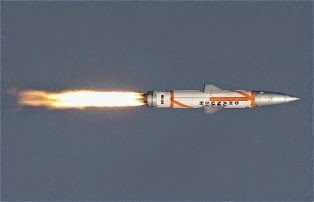
- · Surface-to-surface nuclear-capable Dhanush ballistic missile was test-fired from a naval ship off the Odisha coast on 14 November 2014. Dhanush, a naval variant of India’s indigenously-developed Prithvi missile was fired from a ship in the Bay of Bengal by the Strategic Force Command (SFC) of the defence force.
- · The missile launch was part of an exercise by the armed forces and it reached the designated target with high precision. Missiles launch and flight performance was monitored from the ITR at Chandipur, Odisha.
- · Dhanush missile is capable of carrying conventional as well as nuclear payload of 500 to 1000 kilogram and can hit both land and sea-based targets.
- · The single-stage, liquid-propelled Dhanush already inducted into the armed services is one of the five missiles developed by the Defence Research and Development Organisation (DRDO) under the Integrated Guided Missile Development Programme (IGMDP).
9. Union Ministry of HRD decided to use
Sanskrit as 3rd language in KVs in place of German language
- · Union Ministry of Human Resource Development (HRD) in the second week of November 2014 decided to use Sanskrit as a third language in schools of Kendriya Vidyalaya (KVs) in place of German language.
- · The decision to discontinue German was taken after the meeting of Board of Governors of Kendriya Vidyalaya Sangathan (KVS) on 27 October 2014. The meeting was headed by Union HRD Minister Smriti Irani.
- · German, which was taught as an option to Sanskrit, has now been made an additional subject or hobby class (not a third language) for students from classes 6 to 8.
- · The decision is expected to affect about over 70000 students across 500 KVs from classes 6 to 8 who will be asked to switch from German to Sanskrit. However, students will be given an option to pick any Indian language of their choice as annual exams are barely three months away.
- · German was taught as a third language from classes 6 to 8 in KV schools after a Memorandum of Understanding (MoU) was signed between KVS and Goethe Institute—Max Mueller Bhawan in 2011. However, the MoU was not referred to HRD Ministry at any stage.
- · Earlier at the start of 2014, Sanskrit Shikshak Sangh had moved the Delhi High Court alleging that KVS had introduced German as a third language in place of Sanskrit against the education policy.
- · The three language formula as enunciated by the National policy on Education states and subsequently by the National Curriculum Framework 2005 states that Sanskrit may be studied as a modern Indian language apart from Hindi and English.
10. DD National to be re-launched with
tagline Desh Ka Apna Channel
- · Prasar Bharti announced to re-launch DD National with new tagline Doordarshan National – Desh Ka Apna Channel. Also, new colours of purple and pink are added with a fresh palette of programming.
- · The new look promises fresh content and will provide wholesome entertainment to the viewers from 17 November 2014. The move is aimed at attracting more viewers.
- · The channel will continue to focus on traditional family values – Rishtey, Nation before Self, Rashtra Gaurav and Trustworthiness – Dilon Mein Vishwas.
- · DD Director General Vijayalaxmi Chhabra said that the channel had also adopted competitive procurement guidelines which were attracting major producers towards the pubcaster.
11. Union Government launched the nationwide
Bal Swachhta Mission
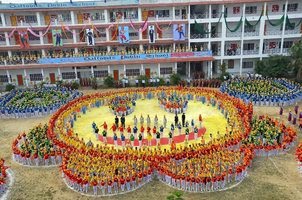
- · The Union Government on 14 November 2014 launched the National Bal Swachhta Mission in New Delhi. 14 November is the birthday of first Prime Minister of India, Jawaharlal Nehru and is celebrated as Children’s Day in India.
- · On the occasion, Union Minister of Women and Child Development Maneka Sanjay Gandhi also released a book on Bal Swachtta Mission prepared by NIPCCD. Apart from this, Union Human Resource Development (HRD) Minister Smriti Irani, who launched the Bal Swachhta Mission at the National Bal Bhavan also launched Udaan programme for girls.
- · The Bal Swachhta Mission is a part of the nationwide sanitation initiative of Swachh Bharat Mission that was launched by the Prime Minister on 2 October 2014.
The
nationwide Bal Swachhta Mission will have the following six themes:
- 1. Clean Anganwadis
- 2. Clean Surroundings like Playgrounds
- 3. Clean Self (Personal Hygiene/Child Health)
- 4. Clean Food
- 5. Clean Drinking Water
- 6. Clean Toilets
- · Apart from this, Bal Swachhta Week is being observed from 14 November to 19 November 2014.
- · The Udaan programme for girls is designed to provide a comprehensive platform to girl students to pursue higher education in engineering and assist them in preparing for the IIT-JEE while studying in Classes XI and XII. There is no financial burden as the entire programme is free for the beneficiaries.
International
12. Farhan Akhtar appointed as UN Women
Goodwill Ambassador for South Asia
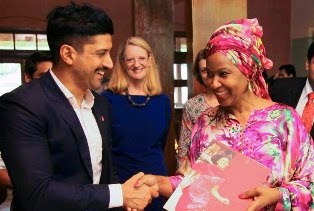
- · Bollywood Actor Farhan Akhtar was on 14 November 2014 appointed as UN Women Goodwill Ambassador for South Asia. Farhan is the first male ever to be chosen as a Goodwill Ambassador in the organization’s history.
- · Farhan will dedicate his efforts as UN Women’s Goodwill Ambassador for South Asia towards the empowerment of women and girls and will serve as an advocate for UN Women’s newly launched HeForShe initiative in advocating for gender equality and women’s empowerment.
- · UN Women’s other Goodwill Ambassadors include British actress Emma Watson, Academy Award winner Nicole Kidman and HRH Princess Bajrakitiyabha Mahidol of Thailand.
- · In July 2010, the United Nations General Assembly created UN Women, the United Nations Entity for Gender Equality and the Empowerment of Women. UN Women is the UN organization dedicated to accelerate progress on meeting women needs worldwide.
13. UK, France, Nepal supported G4 nation for
permanent member of UNSC
- · The UK, France and Nepal on 13 November 2014 supported candidature of India, Germany, Brazil and Japan (G4 nations) for permanent member of a reformed UN Security Council (UNSC). They also emphasized African representation and expansion of the non-permanent seats.
- · The decision to support the G4 nation’s candidature was expressed by these nations during the debate Equitable Representation and Increase in Security Council in the UN General Assembly.
- · During the debate many participating nations noted that it had been 50 years since the council underwent its first and only reform and almost 10 years since the 2005 World Summit, where the world leaders agreed to initiate a reform process.
14. China launched remote sensing satellite
Yaogan-23
- · China on 15 November 2014 launched remote sensing satellite Yaogan-23 from Taiyuan Satellite Launch Centre. The satellite was carried by a Long March-2c rocket, which marks the 198th mission for Long March rocket family.
- · The Yaogan-23 will be used mainly for scientific experiments, natural resource surveys, crop yield estimates and disaster relief.
- · In 2006, China launched the first satellite in the Yaogan series that is Yaogan-1.
- · In future, China planned to launch about 70 remote sensing satellites to detect the near-Earth space environment and predict extreme events.
- · China will also launch about 20 communication satellites to meet communication demand in national security and public services.
- · Besides, China will launch about 30 navigation satellites to provide accurate and reliable global positioning and navigation services.
15. G-20 Leaders Summit held in Brisbane
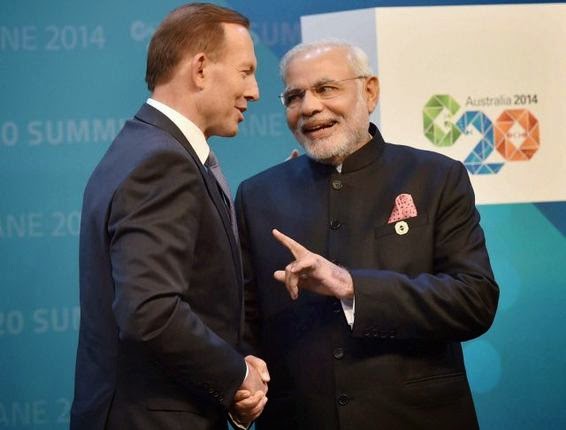
- · The 2014 G-20 Australia summit was the ninth meeting of the G-20 heads of government
- · It was held in Brisbane, the capital city of Queensland, Australia, on 15–16 November 2014. The hosting venue was the Brisbane Convention & Exhibition Centre at South Brisbane.
- · The Leaders' Summit is the most important event in the G20 year. The summit provides a valuable opportunity for leaders to discuss a wide range of global economic issues and to use their collective power to improve people’s lives. The summit is informed by the policy discussions held throughout the year. At the end of the summit, leaders release a communiqué which outlines the G20 policy discussions and commitments.
- · European leaders expressed their desire to support the recovery as the global economy moves beyond the global financial crisis. European Commission President Barroso and European Council President Van Rompuy stressed the importance of coordinated growth strategies as well as finalising agreements on core financial reforms, and actions on tax and anti-corruption.
Sports
16. Johnson named ICC Cricketer of the Year
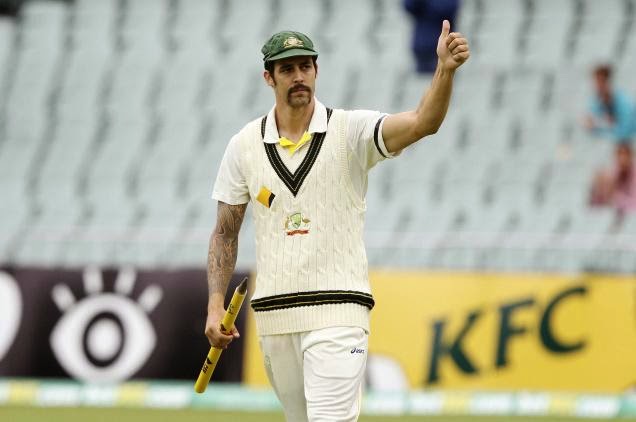
- · It was double delight Mitchell Johnson as the Australian fast bowler was on Friday declared ICC Cricketer of the Year as well as the ICC Test cricketer of the Year.
- · The 33-year-old has won the coveted Cricketer of the Year award for the second time in his career while he is only third Australian after Ricky Ponting (2006) and Michael Clarke (2013) to win the Test Cricketer of the Year award.
- · During the voting period between 26 August 2013 and 17 September 2014, Johnson claimed 59 Test wickets at an average of 15.23, with best bowling figures of seven for 40 runs against England in Adelaide last December.
- · In ODIs, Johnson claimed 21 wickets in 16 games.
- · Since the inception of the awards in 2004, Johnson is only the second player after compatriot Ricky Ponting to win the Sir Garfield Sobers Trophy twice.
- · While Johnson previously won this trophy in 2009, Ponting lifted it back—to—back in 2006 and 2007. Other winners include Rahul Dravid (2004), Jacques Kallis and Andrew Flintoff (2005), Shivnarine Chanderpaul (2008), Sachin Tendulkar (2010), Jonathan Trott (2011), Kumar Sangakkara (2012) and Michael Clarke (2013).