Finance /
Business / Economy
1. India likely to improve economic growth to
6.3% in 2016: UN
- · India’s economic growth is expected to improve to 6.3 per cent in 2016 with the country leading economic recovery in South Asia, according to a United Nations report.
- · The UN World Economic Situation and Prospects 2015 (WESP) report, launched on Wednesday, also said India is likely to make progress in implementing economic policy reforms and help provide support to business and consumer confidence.
- · It said global economic growth is forecast to continue increasing over the next two years, despite legacies from the financial crisis continuing to weigh on growth, and the emergence of new challenges, including geopolitical conflicts such as in Ukraine, and the Ebola outbreak in West Africa.
- · The global economy is expected to grow 3.1 per cent in 2015 and 3.3 per cent in 2016, compared with an estimated growth of 2.6 per cent for 2014, when the pace of expansion has been moderate and uneven.
- · It said India, which is estimated to record a 5.4 per cent economic growth in 2014, will see GDP growth improving to 5.9 per cent next year and 6.3 per cent in 2016.
- · Economic growth in South Asia is also set to gradually pick up from an estimated 4.9 per cent in 2014 to 5.4 per cent in 2015 and 5.7 per cent in 2016.
2. OPEC cuts 2015 global demand growth
forecast
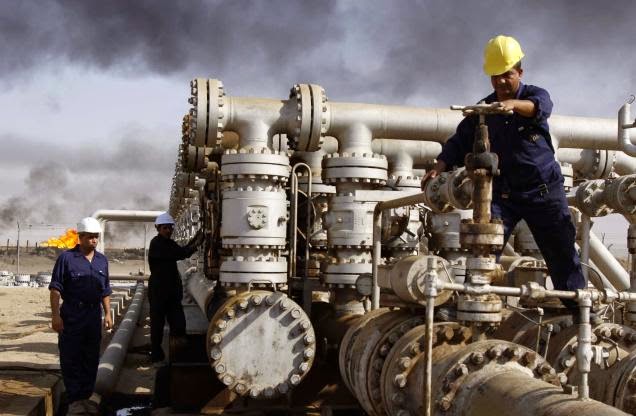
- · Global demand for OPEC crude in 2015 will be less than expected and far below its current output, the group said on Wednesday, pointing to a hefty supply surplus without OPEC output cuts or a slowdown in the U.S. shale boom.
- · In a monthly report, the Organization of the Petroleum Exporting Countries (OPEC) forecast demand for the group’s oil will drop to 28.92 million barrels per day (bpd) in 2015, down 280,000 bpd from its previous expectation and over one million bpd less than it is now producing.
- · The report follows OPEC’s decision last month not to prop up prices by cutting output. Top exporter Saudi Arabia urged fellow members to combat the growth in U.S. shale, which needs relatively high prices to be economic and has been eroding OPEC’s market share.
- · OPEC’s November 27 decision to retain its output target of 30 million bpd sent prices plunging. Brent crude on Wednesday was trading below $66 a barrel, close to a five-year low and down more than 40 per cent since June.
- · Saudi Arabia told OPEC it trimmed production by 80,000 bpd — a reduction that industry sources said earlier this month probably reflects lower domestic demand in power plants rather than a cut in exports.
- · OPEC expects non-OPEC supply to rise by 1.36 million bpd in 2015, led by the United States. The forecast was raised by 120,000 bpd from last month’s report.
- · The producer group trimmed its forecast for global oil demand growth. It expects demand to rise by 1.12 million bpd next year, or 70,000 bpd less than previously thought.
3. Economy of India expected to grow 5-6
percent in 2015: Moody report
- · The report titled 2015 Outlook: Global Credit Conditions was released by the Moody on 10 December 2014. According to report, Economy of India is expected grow to 5 to 6 percent and pick up pace in 2015.
- · As per Moody, economic growth in the current fiscal ending March 2015, would be between 5.4 and 5.9 percent. The growth had slumped to sub-5 percent in the earlier two consecutive fiscals.
- · Highlights of the report
- · Indian economy is expected to grow around 5 percent, the economy will have stronger GDP growth and it is expected 5 to 6 percent in 2015.
- · India had benefited from a strong domestic demand base and diversified export markets that gave protection from the effects of a slowing Chinese economy and muted growth in the eurozone and Japan.
- · Employment and consumption of India is likely expected to rise and the fall in global commodity prices will help to lower high inflation in India.
- · Indian corporate would see improved cash flows on account of acceleration in manufacturing activity.
- · Both wholesale and retail inflation have hit multi-year lows and softness in global crude prices has reduced subsidy pressure on government.
4. RIL announced to sell 49 percent stake in
Textile Business to Chinese firm Shandong Ruyi
- · Mukesh Ambani-led Reliance Industries (RIL) on 9 December 2014 announced to sell 49 percent stake in the textiles business to Chinese textile firm Shandong Ruyi Science and Technology Group for an undisclosed sum.
- · RIL will hive off its textiles business into a new joint venture, in which it will have a 51 percent stake and the rest will be held by the Ruyi Group.
- · RIL operates its existing textile business under the brand Vimal. The business was started by RIL founder Dhirubhai Ambani about five decades ago in 1966 under the name of
- · Reliance Textiles, the company which later became Reliance Industries Ltd (RIL) in 1985.
- · The textile business is located at Naroda near Ahmedabad. But it now contributes 300-350 million US Dollar, or less than 1%, to the overall 65-billion US dollar annual revenues of RIL.
- · In 2012, RIL had appointed bankers to sell its textile business but the sale was called off due to a tepid market and lack of buyers.
5. Union Cabinet approved to set up 500 crore
rupees Credit Guarantee Fund for factoring for MSME units
- · Union Cabinet on 10 December 2014 approved to set up of 500 crore rupees Credit Guarantee Fund for factoring of Micro, Small and Medium Enterprises (MSME) units with an aim to promote factoring without recourse.
- · The factoring will provides liquidity to MSMEs and facilitates collection of receivables.
- · Main feature of the proposed Credit Guarantee Fund
- · Department of Financial Services (DoFS) will be the Settlor and shall establish a Fund for guaranteeing factored debts.
- · The Fund shall be under National Credit Guarantee Trustee Company (NCGTC).
- · The NCGTC will have a Management Committee consisting of Secretary, DoFS as the ex-officio Chairman.
- · The convener of the Management Committee will be nominated by the Settlor. The Management Committee shall be responsible for all policy aspects of the Fund.
- · The fund provides a credit guarantee cover for a maximum of 50 percent of factored debt. To start with, only transactions covered under the Factoring Regulation Act, 2011 will be included.
- · The guarantee fee chargeable from the MLIs shall not exceed 0.75 percent per quarter of the guaranteed factored debts for the amount of guarantee cover.
- · Claims shall be filed by MLIs with the proposed Fund, as per guidelines prescribed by the Management Committee.
- · The actual interest rate to be charged from the MSMEs will be left to Factors.
6. Samsung appointed HyunChil Hong as
President of Southwest Asia
- · Samsung Electronics Ltd on 10 December 2014 announced the appointment of HyunChil Hong as President of Southwest Asia Headquarters.
- · He will take the charge with immediate effect. He succeeded President B D Park. B D Park will now head Sales & Marketing for Digital Appliances Business at the headquarters in South Korea.
- · Hong will lead all of Samsung Electronics’ business in South West Asia that includes India, Sri Lanka, Bangladesh and Nepal.
- · Hong previously served as the President of Samsung Electronics Latin America, a sales subsidiary in Central America for three years. Prior to that, he successfully headed Samsung Electronics’ sales subsidiaries in Chile.
- · Outgoing President BD Park has been serving in India since 2008. He was appointed as Head of the Mobile and IT Division of Samsung India Electronics Ltd (SIEL). In 2012, he was elevated to the position of President and CEO, Samsung Southwest Asia.
India
7. Russia agrees with India to construct 12
nuclear reactors
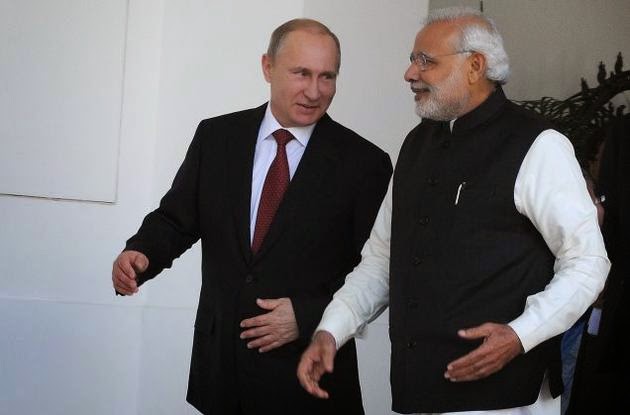
- · Russia's state-owned Rosatom said it would supply 12 nuclear energy reactors for India over 20 years, under an agreement aimed at boosting nuclear energy cooperation signed by the two countries during a summit in New Delhi on Thursday.
- · A 1,000-megawatt reactor is operating at the Russian-built Kudankulam power station in India's Tamil Nadu district, with a second due to come on stream in 2015.
- · Russian President Vladimir Putin had been pushing for Rosatom to increase the number of reactors it could supply to as many as 25.
- · Indian officials say that a total of six reactors will be built at Kudankulam, with a further six to follow at a site that has not yet been determined.
8. Union Government and ATDC signed MoU for
employment oriented training to youths
- · Union Government and Apparel Training & Development Centre (ATDC) on 9 December 2014 signed a Memorandum of Understanding (MoU) for employment oriented training to youths.
- · The objective of the MoU is to provide a framework whereby ATDC can run employment oriented training to the youth at national level.
Details of the MoU
- · ATDC to run customized courses in association with large apparel export houses and leading domestic manufacturers
- · Courses run by ATDC will be approved by National Council of Vocational Training (NCVT) which will facilitate the candidates to get NCVT certificates.
- · ATDC to have freedom in developing such vocational courses wherein theory portion of the courses can be taught in the training centre and practical in the industry
- · ADTC to ensure 80 percent of the students in a batch gets employment.
The MOU will help in three ways
- · It will cut short many impediments in nationwide implementation of the skill based programs.
- · It will focus on changing technology being incorporated in courses.
- · It will focus more on longer duration program with support of DGE&T by tuning with industry inputs.
- Earlier similar MoU have been signed by the Director General, Directorate General of Employment & Training (DGET) with other industry establishments to implement the skill based programs with an objective to generate employment.
- These include Maruti Suzuki India Ltd and TATA Motors in Automobile Sector, Labournet in Construction sector, Raymond in Textile Sector, Cadila in Instrument Mechanic sector, Gujarat Industries Power Company Ltd in Power Sector.
9. WWF-India launched project Mobile Apps for
Climate Change
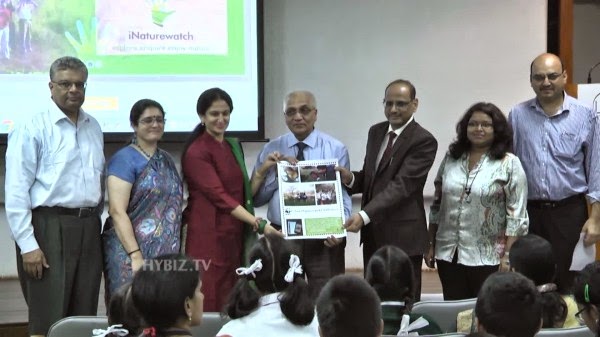
- · World Wide Fund for Nature – India (WWF-India) on 10 December 2014 launched the project Mobile Apps for Climate Change: A Citizen Science Programme for Schools in Metros in Hyderabad. It launched the project in collaboration with the Hyderabad-based L V Prasad Eye Institute.
- · The project was launched to make students aware about biodiversity and make them interested in environment.
- · As part of the project, three mobile apps on urban birds, butterflies and trees were launched. These apps will go live from 12 December 2014.
- · The apps were proposed and developed by V Shubhalaxmi-led Ladybird Environmental Consulting (LEC).
- · These apps will bring urban biodiversity information on the fingertips of the users in four metros, namely Mumbai, New Delhi, Kolkata and Hyderabad.
10. Union Cabinet approved creation of five
posts of ASG at High Courts
- · The Union Cabinet on 10 December 2014 gave its approval for creation of five posts of Additional Solicitors General (ASG), one each for the High Courts of Punjab & Haryana, Patna, Jharkhand, Karnataka and its Circuit Benches at Hubli-Dharwad & Gulbarga and Gujarat.
- · The decision was made in a Cabinet meet chaired by Prime Minister Narendra Modi.
- · The decision will help in strengthening the litigation machinery to represent the Union Government efficiently and effectively as a whole and specifically in these courts.
- · These posts will facilitate transaction of business in accordance with procedures and thus enable assigning of functions to legally trained persons. This will result in greater accountability of Government Departments to curb frivolous litigation and lessen the burden of Government cases in these Courts.
- · It will also boost the morale of Government Department in following the rule of law and defending government policies and preventing high revenue pilferages.
International
11. Ebola fighters named Time magazine’s
‘Person of the Year’
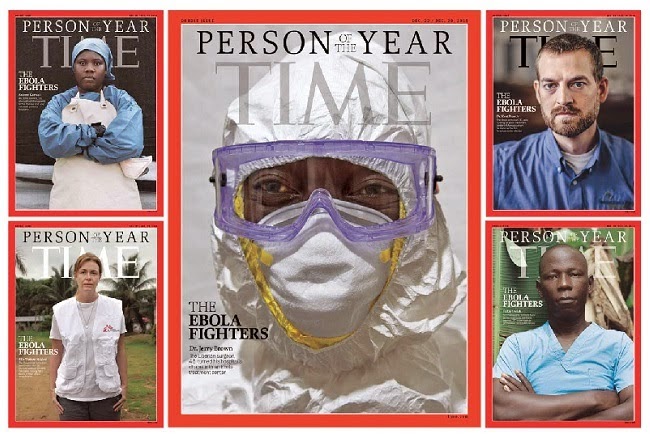
- · The countless doctors, nurses and caregivers at the forefront of battling one of the worst ever outbreaks of the deadly Ebola virus, were on Wednesday collectively named as Time magazine’s 2014 ‘Person of the Year’.
- · The ‘Ebola fighters’ have been awarded for their “tireless acts of courage and mercy” and for “risking, persisting, sacrificing and saving”.
- · Time’s editors unveiled the winner of the annual honour selecting the Ebola fighters from an initial list of 50 world leaders, business heads and record-breaking artists that was narrowed down to a shortlist of eight this week.
- · “Ebola is a war, and a warning. The global health system is nowhere close to strong enough to keep us safe from infectious disease, and ‘us’ means everyone, not just those in faraway places where this is one threat among many that claim lives every day.
- · “The rest of the world can sleep at night because a group of men and women are willing to stand and fight. For tireless acts of courage and mercy, for buying the world time to boost its defences, for risking, for persisting, for sacrificing and saving, the Ebola fighters are Time’s 2014 Person of the Year,” Editor Nancy Gibbs said explaining the publication’s reasoning behind the choice.
- · Time had conducted a separate online poll in which it gave a chance to its readers to select who they think should win the title of Person of the Year.
- · The readers’ poll was won by Prime Minister Narendra Modi, who had secured more than 16 per cent of the almost five million votes cast.
12. Pioneer of home video game console Ralph
Henry Baer died
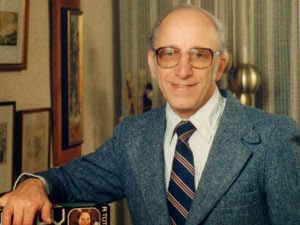
- · The pioneer of home video game console Ralph Henry Baer died on 6 December 2014 in Manchester following a brief illness. He was 92.
- · He was famously known as the Father of Video Games due to his contributions to video game industry.
- · Born to a Jewish family in south-western Germany in 1922, Baer and his family fled the country in 1938 to escape the Holocaust.
- · In the late 1960s, Baer developed a system known as the Brown Box while working for Sanders Associates, a New Hampshire-based defence contractor. Later, Brown Box was named as Magnavox Odyssey.
- · A version of Baer's Brown Box is now at the American History Museum at the Smithsonian in Washington D.C.
- · In 1967, he designed the game Chase, the first game played in a television set.
- · Baer is credited for creating the first light gun for video game console. He is the co-creator of the light-up memory games Simon and Super Simon.
- · Baer received the National Medal of Technology from President George W Bush in 2006 and in 2008, he received the Game Developers Choice Pioneer Award.
- · In 2010, Ralph Henry Baer was inducted into the United States National Inventors Hall of Fame.
- · In 2005, he donated all original videogame units and documents to the Smithsonian Institution.
13. World Wide Web Foundation's Web Index
2014 released
- · The Web Index 2014 was released on 10 December 2014 was World Wide Web Foundation to measure the internet's contribution to social, economic and political progress in the world.

Highlights of the Web Index 2014
- · Web users are at increasing risk of indiscriminate government surveillance. Laws preventing mass surveillance are weak in over 84 percent of countries.
- · Online censorship is increasing as moderate or extensive Web censorship is now seen in 38 percent of countries.
- · Online organising leads to offline change as Web and social media are making a major contribution to sparking citizen action in three in five countries. Meanwhile, women in 60 percent of countries are using the Web to exercise their rights to a moderate or extensive degree.
- · Internet use has increased from around 45 percent to 78 percent in high-income countries since 2005, in low-income countries it has remained below 10 percent year after year.
- · Online Gender Based Violence is not tackled effectively. In 74 percent of Web Index countries, law enforcement agencies and courts are failing to take appropriate actions.
- · Almost 60 percent of the world‘s people are not online, while half of all Web users live in countries that severely restrict rights online.
- · An estimated 4.4 billion people mostly poor, female, rural and living in developing countries have no access to the Internet at all.
- · At least 1.8 billion face severe violations of their rights to privacy and freedom of expression when they go online.
Top 5 Web Index 2014-15 Rankings
- 1- Denmark
- 2- Finland
- 3- Norway
- 4- United Kingdom Of Great Britain And Northern Ireland
- 5- Sweden
India's Ranking in the Web Index 2014
- · India ranks at the 48th Rank with 44.6 score in the index. It ranks behind China and other BRICS (Brazil, Russia, India, China, and South Africa) nations.
- · India’s Internet penetration rate is comparable to Nepal or Namibia. Despite promises of a digital revolution, the Web in India is still inaccessible to a large population.
- · Affordability is India’s biggest concern as the cost of broadband access in the country is greater than in countries in the neighbourhood such as Bangladesh.
14. Kailash Satyarthi and Malala Yousafzai
received Nobel Peace Prize for the year 2014
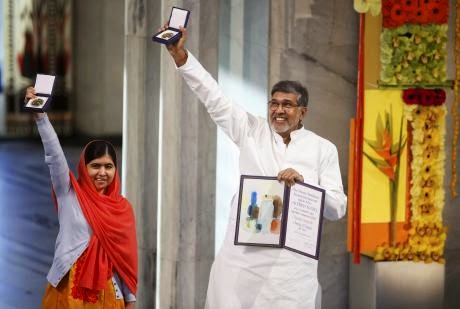
- · Child rights campaigner of India Kailash Satyarthi and Education activist of Pakistan Malala Yousafzai received the Nobel Peace Prize for the year 2014. Both the recipients received medals and prize money 1.4 million US dollars from the Norwegian Nobel Committee at Oslo, Norway on 10 December 2014.
- · Both Kailash Satyarthi and Malala Yousafzai were awarded for their struggle against the suppression of children and young people and for the right of all children to education.
- · Both the co-winners of the Nobel Peace Prize have been described by the Norwegian Nobel Committee as Champions of Peace. Besides, US Senate also passed a resolution recognizing both the co-winners as a symbol of peace.
- · Kailash Satyarthi is a children's rights activist and has been active in the Indian movement against child labour since the 1990s. He founded an organisation Bachpan Bachao Andolan has freed over 80000 children from various forms of servitude and helped in successful reintegration, rehabilitation and education of them.
- · Child education activist of Pakistan Malala Yousafzai at the age of 17 became the youngest ever recipient of the Nobel Prize and also the first person to win the Nobel Prize from Pakistan. She is known for her activism for right to education for women especially in the Swat Valley where the local Taliban had at times banned girls from attending school.
Sports
15. Randhir Singh appointed as honorary
member of IOC
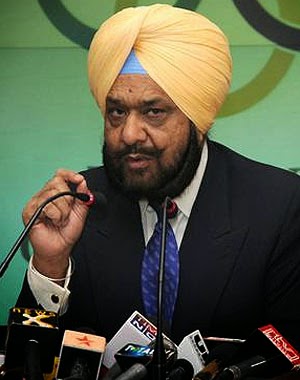
- · Randhir Singh was appointed as an honorary member of the International Olympic Committee (IOC). He was appointed as the honorary member during the IOC session in Monaco held from 8 December 2014 to 9 December 2014.
- · He was named for the honorary membership of the IOC after he served IOC as a full member from India from 2001 to 2014.
- · Randhir Singh is the second Indian to become an honorary member of the IOC after Ashwini Kumar. Ashwini Kumar was also given the membership after serving as full IOC member from India.
- · An honorary member of the IOC can attend its sessions without having the right to vote.
- · Randhir Singh is a former Secretary General of Indian Olympic Association (IOA) who served the association from 1987 to 2012. He is also a former shooter who took part in five Olympics.